
China to ban steering yokes, hidden door handles on cars
Effective January 1, 2027, China will ban yoke steering wheels and hidden door handles in new safety standard

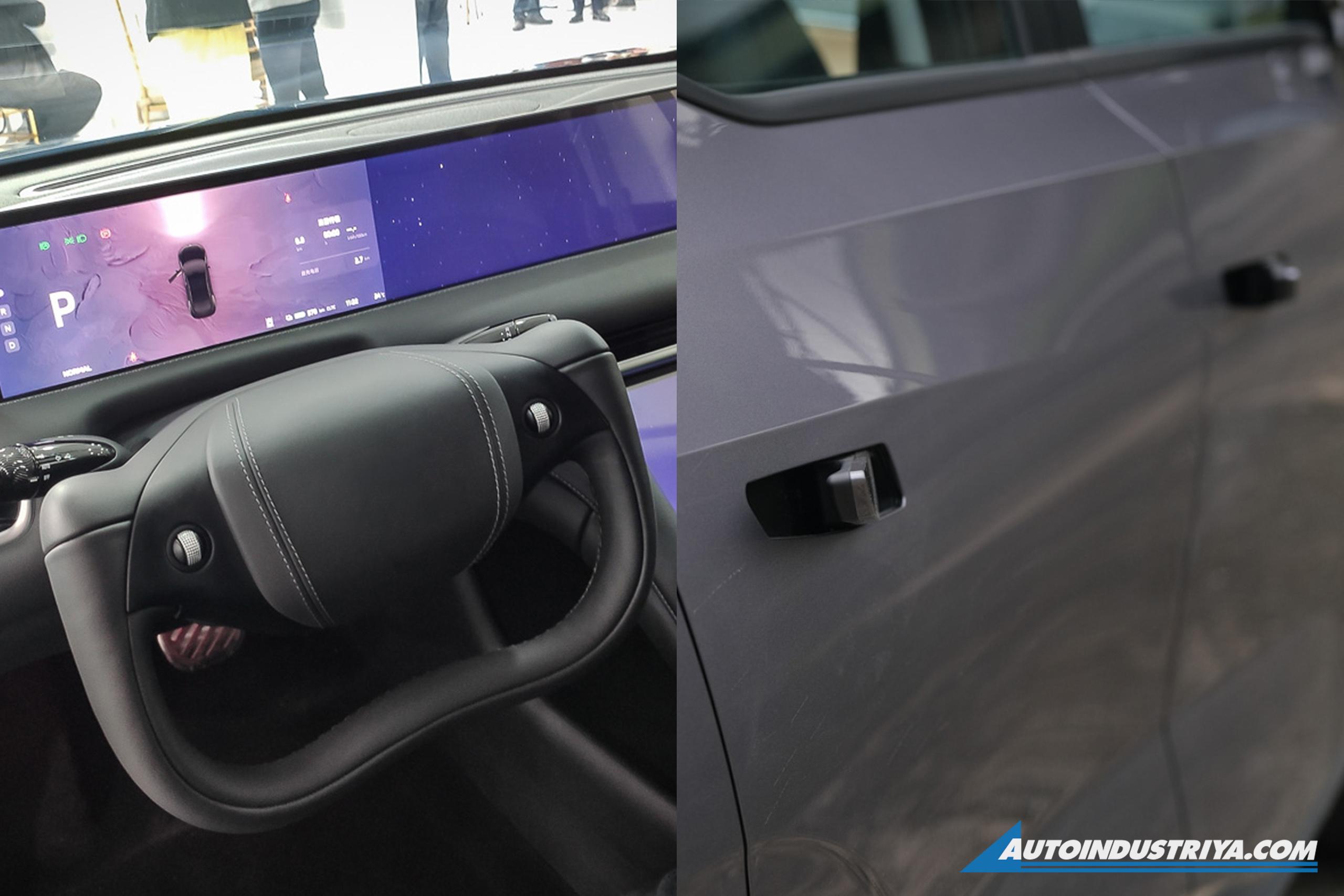
The Chinese government is clamping down on several car features that have compromised safety and even resulted in fatalities due to their design.
The country's Ministry of Industry & Information Technology (MIIT) has announced that it has banned hidden door handles and yoke steering wheels from being used on new vehicles. The ban on both features will take effect on January 1, 2027, to improve vehicle safety and design.
Under the new technical safety requirements, every car door must be equipped with both exterior and interior handles that can be physically manipulated and are clearly visible. Moreover, mechanical release designs will be mandatory, while electric door handles will become optional. Some Chinese cars today come with electrically-operated door handles that have a physical handle that actually activates an electronic switch, which will open the door.
There have been cases in China wherein a vehicle with electric flush door handles couldn't be opened by rescuers due to its design. There were also incidents where EVs with flush door handles caught fire after a crash, and bystanders weren't able to help the occupants get out, resulting in fatalities.
Over to the ban on steering yokes (AKA half steering wheels), the MIIT said that these types of steering controls fail to meet impact testing at ten distinct points around the wheel. The new policy also aligns with international regulations by reducing the horizontal force limit in human module tests. Since steering yokes lack a round design, it automatically fails this.
Moreover, traditional round steering wheels provide a large area of cushioning should a driver lean forward in the event of a collision (not including the cushioning effect of an airbag). Since steering yokes are half steering wheels, drivers can accidentally hit the steering column or dashboard, which increases the risk of injury.
Last but not least is the design of the steering yoke itself. Unlike steering wheels, which have a round design with a predictable shape, the steering yokes are half steering wheels that have irregular covers and design structures. This can lead to an airbag failing to deploy or fragments of the steering yoke hitting the occupants during the quick deployment of an airbag.
Perhaps another concern, although not directly mentioned, is the impractical use of a steering yoke. While they may look trendy and cutting-edge, they are not as practical as the traditional round steering wheel. When making tight maneuvers like U-turns and parking, the round steering wheel offers better ease of use compared to the half steering wheel.
Since the ban on steering yokes and hidden door handles will take effect in 2027, manufacturers will have to make adjustments within the year to meet the new policy. This may even result in some brands making drastic changes to their upcoming vehicle launches to meet next year's regulations.
Related Posts
Toyota PH launches T-OPT aftermarket brand at MIAS 2026
Toyota Motor Philippines officially introduces T-OPT, which is their latest premium regional aftermarket parts brand
MIAS 2026: GWM Tank 700 PHEV makes first overseas market debut in PH
The GWM Tank Hi4-Z PHEV arrives in PH just weeks after it debuted in the PRC
BYD “Drive Electric, Love Pinas” campaign sets two Guinness World Records
BYD and Department of Tourism’s “Drive Electric, Love Pinas” campaign makes it to Guinness World Records
Suzuki Philippines expands Laguna pre-delivery inspection facility
The upgrade lets SPH meet demand while upholding global quality standards
MIAS 2026: Geely PH previews EX2 EV to rival BYD Dolphin
Geely previews the EX2 at 2026 Manila International Auto Show; could start at PHP 950K
MIAS 2026: Jaecoo J5 HEV is priced to compete; starts at PHP 999K
OJPH wants to stir the B-SUV market with the J5 HEV